Imports, Independence, and Innovation: Redefining Pharma Strategy Across MENA
The pharmaceutical supply chain across the Middle East and North Africa is undergoing a profound transformation.

jjjaja
₹10

The pharmaceutical supply chain across the Middle East and North Africa is undergoing a profound transformation.
The Gulf Cooperation Council is witnessing a pharmaceutical transformation unlike anything seen before. National strategies across Bahrain, Kuwait, Oman, Qatar, Saudi Arabia, and the UAE are accelerating breakthroughs in gene therapy, precision medicine, oncology, digital health, and mental wellness. These developments, frequently spotlighted at the Pharma Conference Dubai, position the region as a global healthcare innovation hub.
Medical Affairs Intelligence: Shaping the Future of Pharma in MENA
The recent UAE approval of Tolebrutinib represents a watershed moment for neurology therapeutics across the Middle East and North Africa region. This oral Bruton's tyrosine kinase (BTK) inhibitor, authorized for non-relapsing secondary progressive multiple sclerosis (SPMS), transcends a mere regulatory achievement—it heralds a fundamental transformation in how the region embraces cutting-edge medical innovation. For stakeholders attending the Pharma Conference Dubai, this development offers critical insights into emerging market dynamics.
Healthcare Evolution in the Middle East: From Tradition to Innovation
Over recent decades, the global healthcare industry has witnessed a remarkable geographic shift. The traditional centers of pharmaceutical innovation and medical excellence in North America and Western Europe are now sharing the stage with emerging powerhouses. Among these rising stars, the United Arab Emirates stands out as one of the most dynamic and rapidly advancing healthcare destinations. What was once primarily a healthcare consumer dependent on international expertise has transformed into an innovative producer and exporter of cutting-edge medical solutions. Today, the UAE is recognized as the Middle East's leading destination for pharmaceutical manufacturing, biotechnology advancement, regulatory sophistication, and medical tourism.
The Middle East has rapidly emerged as a global hub for pharmaceutical innovation, healthcare advancement, and medical research. With a growing population, increasing healthcare demands, and massive government investments in the health sector, the region now hosts some of the world's most prestigious pharmaceutical and healthcare gatherings. Whether you are a medical professional, researcher, industry leader, or policy maker, choosing the right conference to attend can shape your professional trajectory, expand your network, and expose you to cutting-edge developments in the pharmaceutical world.
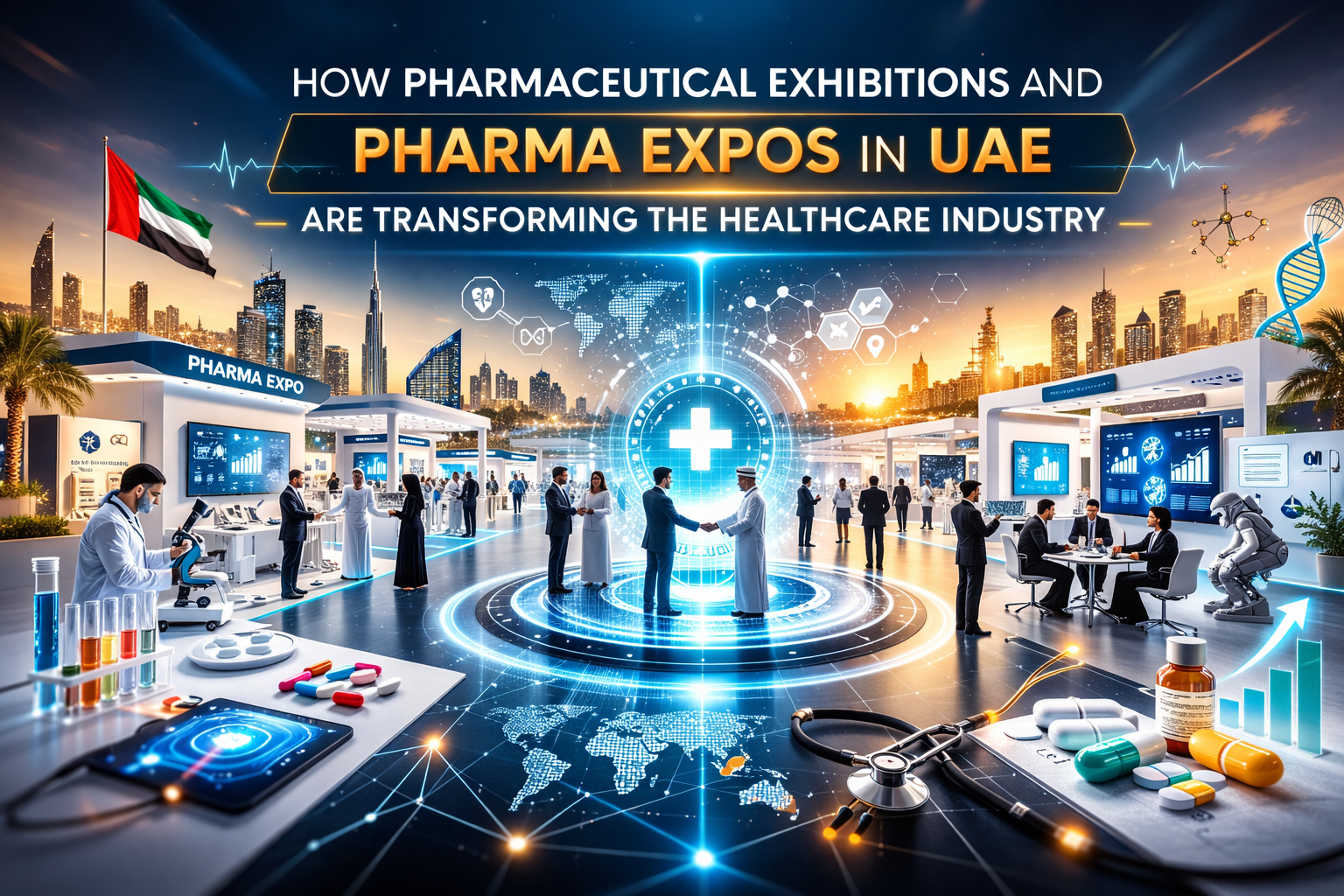
The United Arab Emirates has rapidly emerged as a global powerhouse in the pharmaceutical and healthcare sectors. With world-class infrastructure, visionary government policies, and a strategic geographic position bridging East and West, the UAE has become the ultimate destination for pharmaceutical professionals, researchers, innovators, and healthcare leaders from around the globe. At the heart of this transformation lies the growing influence of pharmaceutical exhibitions and pharma expos that are reshaping how the industry collaborates, innovates, and delivers solutions to patients worldwide.
The pharmaceutical industry continues to evolve at a rapid pace, driven by innovation in biotech, digital health, regulatory science, and global partnerships. For professionals across pharma, biotech, medical devices, and healthcare services, staying connected through major industry events is essential. Conferences and exhibitions provide opportunities to explore emerging trends, meet key stakeholders, and build long-term collaborations.
The global healthcare landscape has witnessed remarkable technological advancements in recent years, with patient monitoring devices playing a crucial role in improving clinical outcomes. Among these essential tools, Pulse oximeters have emerged as indispensable medical instruments, fundamentally transforming how healthcare professionals monitor patient oxygen levels and overall respiratory health. This non-invasive technology has become increasingly vital, particularly following the COVID-19 pandemic, which highlighted the critical importance of continuous oxygen saturation monitoring.